





You’ve probably been seeing Rejuran® everywhere lately. It pops up between the holiday photos and the recipe videos, usually attached to someone raving about their glass skin, and it has that confident, slightly mysterious tone that new treatments always seem to arrive with. Naturally, you’re a little curious and a little sceptical all at once.
That’s a fair place to start. If your skin has been looking a bit tired lately, or the texture isn’t as smooth as it used to be, the idea of something that genuinely improves skin quality is appealing.
So let’s clear the fog. Here’s what Rejuran® actually is, what it does for your skin, what a treatment feels like, and how to know whether it’s worth your time.
So, what is Rejuran®?
Rejuran® is a skin rejuvenation treatment, and the simplest way to think about it is this: most treatments work on your skin, while Rejuran® works with it. Rather than sitting on the surface or filling something in, it nudges your skin to do more of its own renewal and repair work, so the improvement comes from within.
The active ingredient is where it gets interesting. Rejuran® uses polynucleotides, which are naturally occurring building blocks drawn from purified salmon DNA. That detail tends to stop people mid-sentence, and understandably so. The reason it works is that salmon DNA is remarkably close in structure to our own, so your skin recognises it and responds to it rather than treating it as a stranger.
Once it’s in the skin, it gets to work behind the scenes. It creates a hydrated, supportive environment around the cells that produce collagen and elastin, the two proteins doing the quiet structural work of keeping skin firm, springy and resilient. Give those cells a better environment, and they do their job better.
It has been a quiet staple in clinics across Asia for years, long before the hashtags, and has only recently arrived in Australian clinics. The interest here resonates with a real shift in what people want: less about chasing a dramatic transformation, more about long-term skin health that holds up over time.
The skin concerns it can help with
Rejuran isn’t aimed at one specific flaw. Because it works on overall skin quality, it tends to suit concerns that are less about a single line and more about skin that’s lost a bit of its spark.
People usually start looking into it when they notice things like:
- Dull, tired-looking skin that’s lost some of its natural brightness, no matter how much sleep you get.
- Uneven texture, where skin feels rougher or less smooth than it used to under your fingertips.
- Early signs of ageing, like fine lines and a gentle loss of firmness or bounce.
- Lingering changes after acne, where the surface and tone could look more even and settled.
What links all of these is a feeling more than a flaw. Your skin isn’t bad, exactly. It just doesn’t look as rested as you actually feel, and no amount of a good serum quite closes that gap. That’s the niggle Rejuran tends to speak to.
Because the focus is on quality rather than volume, the change tends to be more understated. Most people don’t get a dramatic before-and-after so much as that quietly satisfying moment when someone says you look well and can’t quite put their finger on why.
What a treatment actually feels like
If you’ve never had a skin rejuvenation treatment like this, the unknown is usually the nerve-racking part. So here’s the honest, step-by-step version, with nothing glossed over.
It starts with a proper conversation
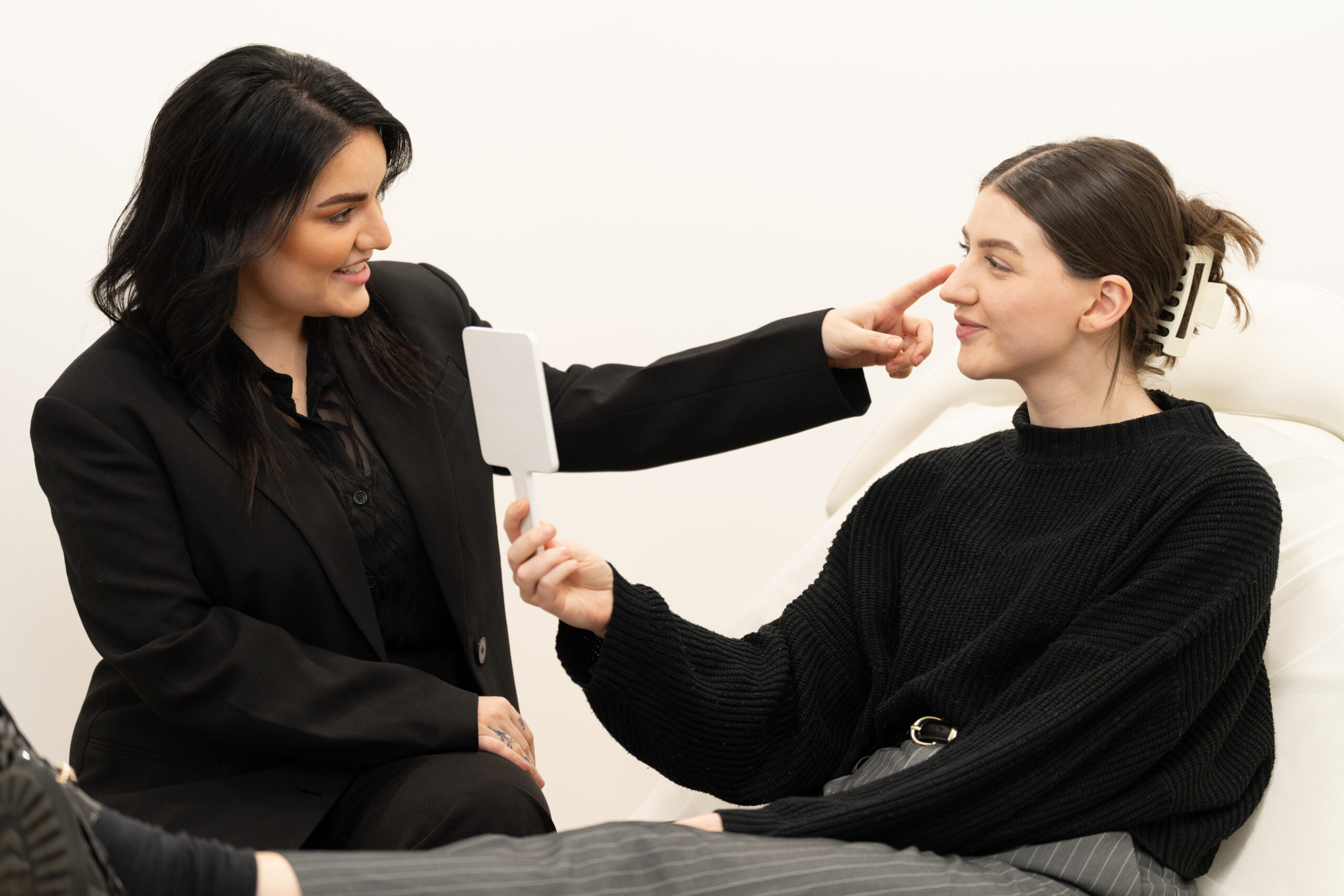
Everything begins with a consultation. A nurse with in-depth skin training looks closely at your skin, asks what’s been bothering you and what you’re hoping for, and tells you honestly whether Rejuran is a sensible fit. If it isn’t, they’ll say so and point you toward something that suits you better. That candour is the whole point of going somewhere with experience.
The treatment itself
On the day, the treatment is quicker and gentler than most people expect. The product is delivered into the skin through a series of small injection points across the area, and your nurse will usually apply a numbing step beforehand to keep you comfortable. Most people walk out a little surprised at how manageable it was, having built it up into something far bigger in their heads.
The few days afterwards
Afterwards, it’s normal to notice some mild redness or small bumps where the skin was treated. They’re temporary and usually settle within a few days, so it’s worth choosing your timing if you’ve got a big event coming up. Nothing dramatic, just a short, quiet recovery while your skin does its thing.
When you’ll actually see results
This is the part to be clear-eyed about. Rejuran works gradually, not overnight. The improvement builds over the following weeks as your skin responds, and a short course of sessions is usual rather than a single visit. Your nurse will map out your treatment plan, so you always know what you’re signing up for before you commit to anything.
How it differs from other skin treatments
If you’ve explored skin treatments before, you’ll know there’s a long menu of them, and it’s tempting to assume they all roughly blur into the same thing. They don’t, and the difference is genuinely worth understanding before you spend anything.
Plenty of well-loved treatments work on the surface. Some flood the skin with hydration for an instantly fresher look, while others add volume or smooth a specific line. These can be brilliant for the right concern. But they’re working on the skin, adding or adjusting something you can see.
Rejuran takes the other road. Instead of changing how your skin looks, it improves the condition and resilience of the skin barrier at a dermal level, so any change comes from your skin simply being healthier rather than from something filling or covering it. That’s why people tend to call it a skin-health treatment rather than a purely cosmetic one.
It’s also why it plays so nicely with everything else. It sits comfortably alongside your existing skincare and other treatments rather than replacing them. You’re not chasing one dramatic reveal. You’re after skin that behaves better, week after week.
Why a qualified aesthetic nurse makes the difference
With any aesthetic treatment delivered into the skin, who’s holding the needle matters at least as much as the treatment itself. This isn’t the place to chase the cheapest option you can find online.

A good practitioner does the unglamorous but essential work. They assess your skin properly, they’re honest about what’s realistic, and they only recommend the treatment if it genuinely fits you. Every practitioner performing Rejuran® treatment at SILK is AHPRA-registered, which means your skin is treated to Australian clinical standards.
There’s a practical advantage too. Having it done somewhere that offers a full range of skin and aesthetic treatments, like SILK, where laser, body, and skin services sit under one roof across Australia, means your aesthetic nursecan weigh Rejuran against everything else on the table and build a plan around your skin, rather than fitting you to whatever happens to be on the menu that day.
Who it tends to suit, and who it doesn’t
Rejuran isn’t for everyone, and any nurse worth seeing will tell you as much. It tends to suit people who feel their skin has lost a little of its vitality and want a genuine, gradual improvement in quality rather than an instant or dramatic change. If you’re someone who likes the idea of supporting your skin’s health over time, and you’re realistic about the fact that the best results build across a course, you’re squarely the kind of person it’s designed for.
It’s less likely to be the right call if you’re chasing an overnight transformation, if you want to target one very specific structural concern that another treatment handles better, or if you’re not in a position to complete a short course. None of that rules you out for good, and it’s exactly the sort of thing a consultation sorts out. The honest answer is sometimes that a different treatment would serve you better, and a good clinic will happily say so.

Thinking about Rejuran®? Start with a consultation
Whether Rejuran® treatment is right for your skin depends on your goals, your skin type and what an aesthetic nurse sees during a proper assessment. You do not have to work that out on your own, and there is no pressure to decide anything on the spot.
Winter is quietly one of the better times to focus on skin quality, while your skin is out of the harsh summer sun and has room to respond. If you’re curious, the clearest next step is an honest consultation about your skin, where someone can take a proper look, talk you through your options and help you work out whether it’s worth it. No hard sell, just a straight answer.
FAQs
How do I know if my skin barrier needs support?
Changes in your skin barrier can show up as increased sensitivity, dehydration, rough texture or skin that feels harder to keep settled. A aesthetic nurse can assess whether your skin is ready for a rejuvenation treatment or whether it needs a gentler support plan first.
How should I prepare for a Rejuran® consultation?
Come in with a clear idea of what has changed in your skin, what you are hoping to improve, and any treatments or active skincare you have used recently. Your aesthetic nurse may also ask about your skin history, sensitivities, medical background and upcoming events so they can give advice that fits your situation.
What should I tell my aesthetic nurse before treatment?
It is important to mention any recent skin treatments, flare-ups, allergies, medications, pregnancy or breastfeeding, and any history of scarring or unusual skin reactions. These details help your aesthetic nurse decide whether treatment is suitable on the day or whether another option or timing may be more appropriate.
Can Rejuran® be part of a broader skin plan?
Rejuran® may be considered as one part of a personalised skin plan, depending on your skin condition, goals and what your aesthetic nurse recommends. For some people, that plan may also include skincare, maintenance treatments or changes to timing, rather than relying on one treatment alone.
What skincare habits matter after a skin rejuvenation treatment?
Gentle skincare, daily SPF and avoiding unnecessary irritation are usually important after any professional skin treatment. Your aesthetic nurse will give you aftercare instructions based on your skin and treatment plan, including when to pause or restart stronger active products.